
Introduction
If you’re considering semaglutide for weight loss, one of the first questions you may have is, “What dose will I start on, and how does the dosage change over time?”
Unlike many medications that are prescribed at a single dose, semaglutide is typically introduced gradually. This process—known as dose escalation or titration—allows your healthcare provider to increase the medication over time as your body adjusts.
Starting with a lower dose and increasing it gradually is an important part of treatment. It helps improve tolerability, reduces the likelihood of digestive side effects, and gives your healthcare provider an opportunity to monitor how you’re responding before making any adjustments.
It’s important to remember that there is no one-size-fits-all dosing schedule. While many treatment plans follow a gradual titration approach, your prescribed dose, the timing of dose increases, and your long-term maintenance plan should always be determined by a licensed healthcare provider based on your medical history, treatment goals, and individual response.
In this guide, you’ll learn:
- Why semaglutide dosing is increased gradually
- What dose escalation means
- What a commonly used titration schedule may look like
- What to expect as treatment progresses
- Why some patients remain on the same dose longer than others
- The importance of individualized medical supervision throughout treatment
Whether you’re just beginning your weight-loss journey or simply want to better understand how semaglutide treatment works, this guide will help you feel more informed before speaking with your healthcare provider.
Understanding Dose Escalation
One of the most unique aspects of semaglutide treatment is that patients generally do not begin at the highest therapeutic dose. Instead, healthcare providers commonly use a gradual dose-escalation process that allows the body to adapt over time.
Dose escalation, sometimes called titration, refers to the practice of starting with a lower dose and increasing it in planned intervals when appropriate. This gradual approach is widely used with GLP-1 receptor agonists because the medication affects digestion, appetite, and how quickly food leaves the stomach.
Beginning treatment slowly serves several important purposes:
- It gives your digestive system time to adjust.
- It may reduce the likelihood or severity of gastrointestinal side effects such as nausea or bloating.
- It allows your healthcare provider to evaluate how well you’re tolerating the medication.
- It provides opportunities to make individualized treatment decisions before increasing the dose.
Although many patients eventually reach higher maintenance doses, the starting dose is intended to help your body adapt—not necessarily to produce maximum weight loss immediately. Understanding this can help set realistic expectations during the first several weeks of treatment.
Patience is an important part of the process. Weight loss is influenced by many factors, including nutrition, physical activity, sleep, stress, underlying health conditions, and adherence to your prescribed treatment plan. Gradually increasing the medication helps create a foundation for long-term success rather than focusing on rapid short-term changes.
Why Semaglutide Treatment Typically Begins with a Lower Dose
Patients are sometimes surprised to learn that they begin treatment at a relatively low dose. It’s natural to wonder why providers don’t simply prescribe the highest available dose from the start.
The answer comes down to safety, tolerability, and individualized care.
Semaglutide works by slowing stomach emptying, increasing feelings of fullness, and reducing appetite. These effects contribute to successful weight loss, but they can also lead to temporary digestive symptoms while your body adjusts.
Beginning treatment with a lower dose helps minimize these effects while allowing your healthcare provider to evaluate how you’re responding before considering any dose increases.
A gradual approach can also:
- Improve overall treatment adherence.
- Reduce the likelihood of patients discontinuing therapy because of temporary side effects.
- Allow time to establish healthy eating habits that support long-term weight management.
- Provide flexibility if your provider determines that remaining at your current dose is more appropriate than increasing it.
Every patient’s experience is different. Some individuals tolerate each dose increase with minimal discomfort, while others may benefit from remaining on the same dose for a longer period before progressing.
For this reason, it’s important to avoid comparing your treatment plan with someone else’s. Your provider’s recommendations are based on your individual health history, response to treatment, and clinical judgment—not on a standard timeline.
A Commonly Used Semaglutide Dose Escalation Schedule
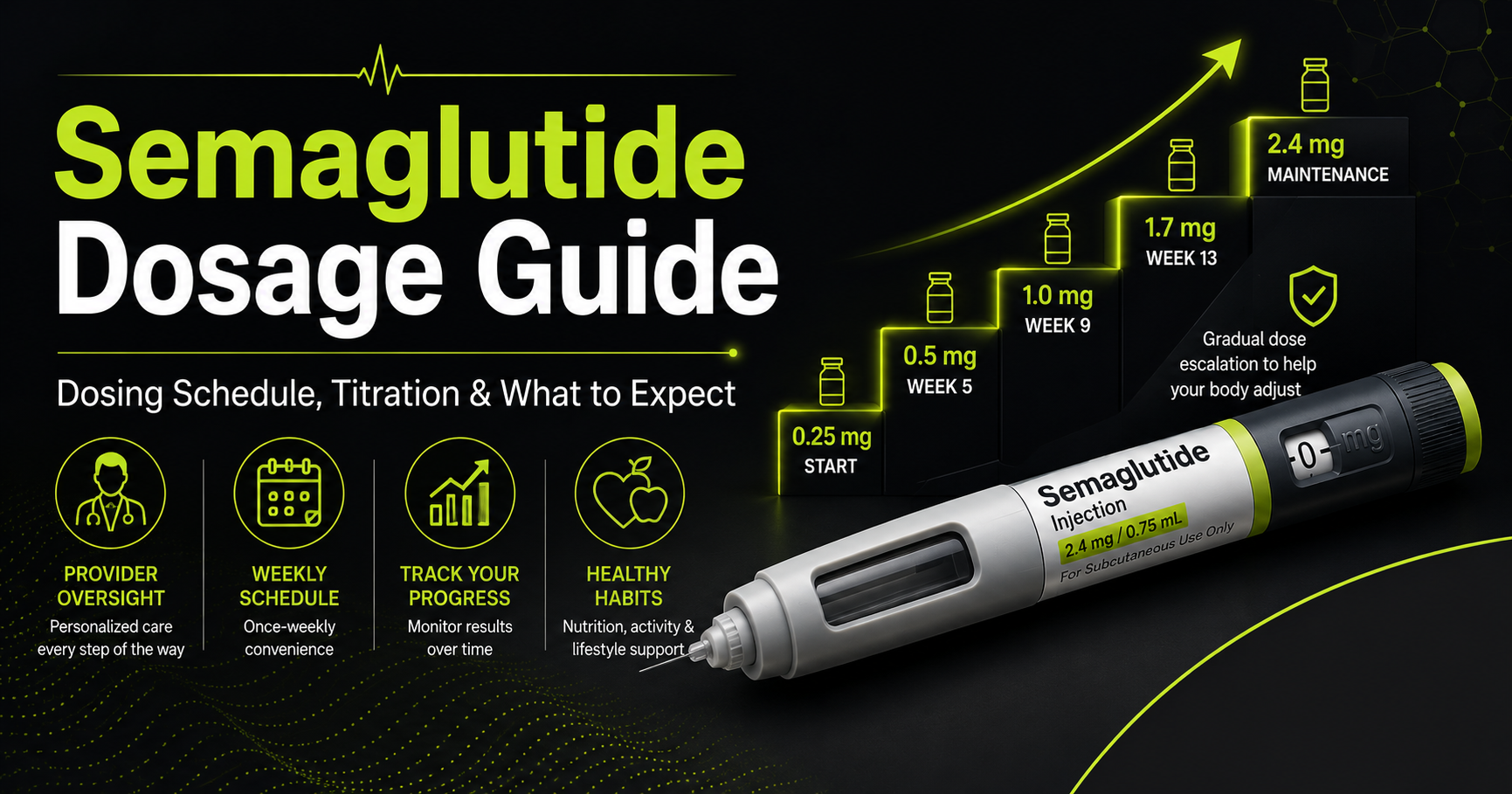
Many semaglutide treatment plans follow a gradual titration schedule, but individual treatment plans vary. Your licensed healthcare provider will determine the most appropriate dosing strategy for your specific situation.
The table below illustrates an example of a commonly used dose-escalation approach for weight management. It is provided for educational purposes only and should not be used to start, stop, or change your medication.
| Treatment Phase | Example Dose | Purpose |
|---|---|---|
| Initial Treatment | 0.25 mg once weekly | Allows the body to begin adjusting to treatment. |
| Dose Escalation | 0.5 mg once weekly | Continues treatment while assessing tolerance. |
| Continued Escalation | 1.0 mg once weekly | May provide additional therapeutic benefit if appropriate. |
| Ongoing Escalation | 1.7 mg once weekly | Common step in gradual dose progression for some patients. |
| Maintenance | Up to 2.4 mg once weekly* | Long-term maintenance dose for some patients, when appropriate. |
Important: This table illustrates a commonly used titration schedule for educational purposes only. Not every patient follows this progression, and some individuals may remain on a lower dose or follow a different treatment plan. Your healthcare provider will determine the appropriate dosing schedule based on your individual medical history, treatment response, tolerability, and current prescribing guidelines.
Why Everyone’s Treatment Plan Looks Different
One of the most common misconceptions about semaglutide is that every patient follows the exact same schedule. In reality, treatment is individualized, and healthcare providers may adjust the pace of dose escalation based on a variety of factors.
Your provider may consider:
- How well you’re tolerating the medication.
- Whether you’re experiencing side effects.
- Your progress toward your weight-loss goals.
- Other medical conditions or medications.
- Your overall health history.
- Clinical guidelines and prescribing recommendations.
Some patients remain on a lower dose longer because they are responding well and tolerating treatment comfortably. Others may require additional time before increasing their dose due to temporary side effects.
The goal is not simply to reach the highest dose—it’s to find the dose that provides the greatest benefit while maintaining an acceptable safety and tolerability profile for the individual patient.
What to Expect During the First Month of Treatment
The first month of semaglutide treatment is often focused on helping your body adjust to the medication rather than achieving maximum weight loss. During this period, your healthcare provider will typically monitor how well you’re tolerating treatment and whether you’re experiencing any side effects before considering future dose adjustments.
Some patients notice changes in their appetite within the first few weeks, while others experience a more gradual transition. Responses vary from person to person, and it’s important to remember that everyone’s treatment journey is different.
During the early weeks of treatment, many patients report:
- Feeling full sooner during meals
- Reduced hunger between meals
- Smaller portion sizes without feeling deprived
- Increased awareness of fullness cues
- Mild digestive symptoms as the body adjusts
Not everyone experiences noticeable weight loss during the first month, and that’s perfectly normal. The initial phase of treatment is designed to establish a strong foundation while allowing your digestive system time to adapt.
💡 Key Takeaway:
The goal of the first month is not rapid weight loss—it’s helping your body adjust comfortably to treatment while establishing healthy habits that support long-term success.
What Happens as the Dose Increases?
If your healthcare provider determines that you’re tolerating treatment well, they may recommend increasing your dose according to your individualized treatment plan.
Each dose increase is intended to build upon the effects of the previous dose. As treatment progresses, many patients continue to experience reduced appetite and improved portion control, although the rate and extent of weight loss vary significantly from person to person.
Some individuals notice that temporary digestive symptoms return briefly after a dose increase. This is one reason providers gradually escalate treatment rather than beginning with a higher dose.
Common experiences after a dose increase may include:
- Temporary nausea
- Increased feelings of fullness
- Mild bloating
- Changes in bowel habits
- Temporary fatigue
- Reduced appetite
For many patients, these symptoms improve over several days as the body adjusts.
Because every patient responds differently, your healthcare provider will consider your individual experience—not simply the calendar—when deciding whether to continue increasing your dose.
Why Some Patients Stay on the Same Dose Longer
A common misconception is that everyone should progress through treatment at the same pace. In reality, healthcare providers often individualize treatment based on how each patient responds.
Remaining on the same dose for a longer period does not necessarily mean treatment isn’t working.
There are several reasons why your provider may recommend staying at your current dose, including:
- You’re achieving satisfactory progress toward your goals.
- You’re experiencing manageable but ongoing side effects that may improve with additional time.
- Your provider wants to ensure you’re tolerating treatment before considering further increases.
- Your overall treatment plan has been tailored to your individual health history and clinical needs.
The objective is not simply to reach the highest available dose. Instead, the goal is to identify the dose that provides meaningful benefit while maintaining good tolerability and supporting long-term adherence.
📌 Important:
Never compare your dosage progression with someone else’s. Treatment plans are individualized, and what is appropriate for one patient may not be appropriate for another.
Does a Higher Dose Always Mean Better Results?
It’s easy to assume that taking a higher dose automatically leads to greater weight loss, but treatment is more nuanced than that.
While higher doses may provide additional therapeutic benefit for some patients, increasing the dose also has the potential to increase side effects. Your healthcare provider carefully balances these factors when determining whether a dose adjustment is appropriate.
Weight-loss success depends on many factors beyond medication alone, including:
- Nutrition
- Physical activity
- Sleep quality
- Stress management
- Underlying medical conditions
- Consistency with treatment
- Individual metabolism and response
For some individuals, a lower dose may provide an appropriate balance of effectiveness and tolerability. Others may benefit from progressing further according to their provider’s recommendations.
Rather than focusing on reaching the highest dose, it’s more helpful to focus on developing sustainable habits that support long-term health.
What If You Miss a Dose?
Life happens, and it’s understandable to have questions about what to do if you miss a scheduled injection.
The appropriate course of action depends on several factors, including when the dose was missed and your individual treatment plan. Because these situations can vary, it’s important to follow the instructions provided by your prescribing healthcare provider and the medication’s official prescribing information.
If you’re unsure what to do after missing a dose:
- Contact your prescribing healthcare provider for guidance.
- Follow the instructions included with your prescribed medication.
- Avoid making changes to your dosing schedule without professional guidance.
Maintaining a consistent weekly schedule can help support treatment adherence. Many patients find it helpful to set reminders on their phone or calendar to avoid missed doses.
💡 Key Takeaway:
If you miss a dose, don’t guess. Your healthcare provider is the best source of guidance for your specific situation.
Why Regular Follow-Up Matters
Semaglutide treatment is more than simply receiving a prescription. Ongoing follow-up allows your healthcare provider to evaluate your progress, monitor for side effects, answer questions, and determine whether any adjustments to your treatment plan may be appropriate.
Depending on your provider’s recommendations, follow-up visits may include discussions about:
- Your weight-loss progress
- Changes in appetite
- Medication tolerance
- Nutrition and hydration
- Physical activity
- Side effects
- Overall health and wellness goals
These conversations help ensure your treatment remains personalized and aligned with your long-term health objectives.
At EasyMedDoc, we believe that successful weight management involves more than medication alone. Education, communication, and ongoing support are important components of a comprehensive treatment plan.
Building Healthy Habits Alongside Treatment
While semaglutide can be a valuable tool, it works best as part of a broader commitment to healthy lifestyle habits.
Patients often achieve the greatest long-term success when they combine treatment with:
- Balanced, nutrient-dense meals
- Adequate daily protein intake
- Regular physical activity
- Consistent hydration
- Healthy sleep habits
- Ongoing communication with their healthcare provider
These habits not only support weight management but also contribute to overall health and well-being long after treatment goals have been reached.
🌱 Healthy Habit Reminder:
Medication is one tool in your weight-loss journey. Sustainable nutrition, regular movement, quality sleep, and ongoing support all play important roles in achieving and maintaining long-term success.
Understanding Side Effects During Dose Escalation
One of the most common reasons healthcare providers increase semaglutide gradually is to help minimize side effects as your body adapts to treatment.
Each time the medication dose increases, your digestive system may need time to adjust. Some patients notice temporary symptoms after a dose escalation, while others transition with little or no discomfort.
Experiencing mild side effects does not necessarily mean something is wrong. In many cases, it reflects your body’s normal adjustment to changes in appetite regulation and digestion.
Some of the more commonly reported symptoms during dose escalation include:
- Mild nausea
- Feeling full sooner than expected
- Bloating
- Constipation
- Diarrhea
- Mild fatigue
- Headaches
For many patients, these symptoms improve within several days to a few weeks after the dose increase.
💡 Key Takeaway:
Temporary side effects after a dose increase are relatively common. Your healthcare provider designs the titration schedule to help your body adjust gradually while balancing effectiveness and tolerability.
Why Your Provider May Delay a Dose Increase
Many patients assume that increasing the dose as quickly as possible is always the goal. In reality, your healthcare provider may recommend remaining at your current dose for a longer period if they believe it’s in your best interest.
This decision is based on clinical judgment—not simply the calendar.
Reasons a provider may recommend delaying dose escalation can include:
- Ongoing digestive side effects that have not yet improved.
- Difficulty staying adequately hydrated.
- Concerns about nutrition due to significantly reduced food intake.
- The need for additional monitoring based on your overall health.
- Satisfactory progress at your current dose.
Delaying a dose increase should not be viewed as a setback. Instead, it often reflects an individualized treatment plan designed to improve comfort, safety, and long-term adherence.
Every patient’s body responds differently, and successful treatment is not measured by how quickly the dose increases.
Why Patience Matters During Treatment
Weight loss is rarely perfectly linear.
Some weeks you may notice steady progress, while other weeks the scale changes very little. This is a normal part of the weight-loss journey and does not necessarily indicate that your medication has stopped working.
Many factors influence weight-loss progress, including:
- Fluid retention
- Hormonal fluctuations
- Physical activity
- Nutrition
- Sleep quality
- Stress
- Individual metabolism
Your healthcare provider will typically evaluate your overall progress over time rather than focusing on changes from one week to the next.
Developing healthy lifestyle habits alongside medication often contributes more to long-term success than focusing solely on short-term weight changes.
📌 Important:
Sustainable weight management is measured over months—not days or weeks. Consistency is often more important than rapid progress.
Questions to Discuss During Your Follow-Up Visits
Regular follow-up appointments are an opportunity to review your progress, discuss any concerns, and ensure your treatment plan continues to meet your needs.
Consider discussing topics such as:
- How your appetite has changed.
- Whether you’re experiencing side effects.
- How you’re tolerating your current dose.
- Your hydration and nutrition habits.
- Your physical activity routine.
- Questions about your treatment goals.
- Any changes in your overall health or medications.
These conversations help your healthcare provider make informed decisions about your ongoing care.
Remember that there are no “good” or “bad” answers during follow-up visits. Honest communication helps your provider recommend the most appropriate treatment plan for your individual situation.
Tips for Staying Consistent During Treatment
Successful weight management is built on consistency rather than perfection.
Many patients find it helpful to establish routines that support long-term success.
Healthy habits that may improve your treatment experience include:
- Choosing a consistent day each week for your injection.
- Setting calendar reminders so doses are not forgotten.
- Drinking water regularly throughout the day.
- Eating balanced meals that include adequate protein.
- Remaining physically active within your comfort level.
- Keeping follow-up appointments with your healthcare provider.
- Tracking questions or symptoms to discuss during future visits.
Building these habits early in treatment often makes it easier to maintain progress over the long term.
When Should You Contact Your Healthcare Provider?
While many side effects improve as your body adjusts, some situations warrant communication with your healthcare provider through your patient portal.
You should contact your provider if you experience:
- Side effects that are becoming more severe rather than improving.
- Difficulty eating or drinking because of nausea or vomiting.
- Symptoms that interfere with your daily activities.
- Persistent diarrhea or constipation.
- Concerns about hydration.
- Questions about your treatment plan or medication schedule.
Your healthcare provider can evaluate your symptoms and determine whether any changes to your treatment plan are appropriate.
Avoid making adjustments to your medication on your own unless instructed to do so by your prescribing provider.
When Should You Seek Immediate Medical Attention?
Although serious complications are uncommon, some symptoms require prompt medical evaluation.
Seek immediate medical attention if you experience:
- Severe or persistent abdominal pain.
- Repeated vomiting with inability to keep fluids down.
- Signs of a severe allergic reaction, such as swelling of the face, lips, tongue, or throat.
- Difficulty breathing.
- Severe dehydration.
- Chest pain.
- Loss of consciousness.
If you’re unsure whether your symptoms require urgent evaluation, it’s always appropriate to seek medical advice promptly.
🚨 Important:
Educational articles like this one cannot replace individualized medical care. If you believe you’re experiencing a medical emergency, call 911 or seek emergency medical attention immediately.
Your Dose Is Only One Part of Your Success
It’s understandable to focus on your weekly dose, especially when reading about other people’s experiences online.
However, the number on your prescription is only one piece of a much larger picture.
Long-term success is influenced by many factors, including:
- Consistent medication use as prescribed
- Balanced nutrition
- Regular physical activity
- Adequate sleep
- Stress management
- Ongoing communication with your healthcare provider
- Sustainable lifestyle habits
Many patients discover that the healthy routines they develop during treatment become just as valuable as the medication itself.
Rather than comparing your dose or weight-loss timeline to someone else’s, focus on the progress you’re making toward your own health goals.
🌱 Healthy Habit Reminder:
Successful weight management isn’t about reaching the highest dose—it’s about finding an individualized treatment plan that supports your health, fits your lifestyle, and can be maintained over time under the guidance of your healthcare provider.
Common Myths About Semaglutide Dosing
As semaglutide has become more widely used for weight management, a significant amount of information—and misinformation—has appeared online. Understanding the facts can help you make informed decisions and have more productive conversations with your healthcare provider.
| Myth | Fact |
|---|---|
| Everyone follows the exact same dosing schedule. | Treatment plans are individualized. Your healthcare provider determines the most appropriate dosing schedule based on your medical history, treatment response, and clinical judgment. |
| Increasing the dose faster leads to better weight loss. | Dose escalation is designed to improve tolerability. Increasing the dose too quickly may increase the likelihood of side effects without improving long-term outcomes. |
| If weight loss slows, the medication has stopped working. | Weight loss naturally varies over time. Your provider considers your overall progress rather than short-term changes alone. |
| The highest dose is the “best” dose. | The goal is to find the dose that provides an appropriate balance of effectiveness and tolerability for each individual patient. |
| If someone else is taking a different dose, my treatment must be wrong. | Every treatment plan is personalized. Comparing your dosage to someone else’s is rarely helpful because individual health factors differ. |
Key Takeaways
If you remember only a few things from this guide, let them be these:
- Semaglutide treatment typically begins with a lower dose and increases gradually to help your body adjust.
- Dose escalation is individualized and determined by your licensed healthcare provider.
- Not every patient follows the same timeline or reaches the same maintenance dose.
- Mild digestive side effects are common during dose increases and often improve over time.
- Long-term success depends on much more than medication alone—it also includes healthy nutrition, physical activity, hydration, sleep, and ongoing communication with your healthcare provider.
- Never change your prescribed dose without first speaking with your healthcare provider.
Understanding the purpose of dose escalation can help you approach treatment with realistic expectations and greater confidence throughout your weight-loss journey.
Frequently Asked Questions
Why doesn’t semaglutide start at the highest dose?
Semaglutide treatment typically begins with a lower dose to help your body adjust gradually. Starting slowly may reduce the likelihood of digestive side effects and allows your healthcare provider to monitor how you’re responding before considering dose increases.
How often is the dose increased?
Many treatment plans use a gradual dose-escalation schedule, but the timing of dose increases varies. Your healthcare provider will determine the most appropriate schedule based on your individual response, treatment goals, and current prescribing recommendations.
What happens if I experience side effects after my dose increases?
Some patients experience temporary digestive symptoms after a dose increase as their body adjusts. If side effects become severe, persist, or interfere with eating, drinking, or daily activities, contact your healthcare provider for guidance rather than making changes to your medication on your own.
Will I eventually reach the highest maintenance dose?
Not necessarily. Some patients remain on a lower dose if they are responding well and tolerating treatment comfortably. Your healthcare provider will determine the most appropriate maintenance dose based on your individual needs.
Does a higher dose guarantee greater weight loss?
Not always. Weight-loss outcomes vary from person to person and depend on many factors beyond medication alone, including nutrition, physical activity, sleep, stress management, and overall adherence to your treatment plan.
Can my provider keep me on the same dose longer?
Yes. If your healthcare provider believes additional time at your current dose is appropriate based on your response or tolerability, they may recommend remaining at that dose before considering future adjustments.
Should I compare my treatment plan with someone else’s?
No. Every patient’s medical history, treatment goals, and response to medication are different. Your provider develops a treatment plan specifically for you, so comparing your progress or dosage with others is generally not helpful.
Is semaglutide dosing the same for everyone?
No. Although many treatment plans follow a similar dose-escalation approach, treatment should always be individualized and managed under the supervision of a licensed healthcare provider.
Final Thoughts
Understanding how semaglutide dosing works can help you feel more confident as you begin or continue your weight-loss journey. While many treatment plans follow a gradual dose-escalation approach, every patient’s experience is unique, and your healthcare provider will tailor your treatment plan to your individual health history, goals, and response to therapy.
It’s also important to remember that semaglutide is only one component of a comprehensive weight-management program. Sustainable results are supported by healthy nutrition, regular physical activity, quality sleep, stress management, and consistent follow-up with your healthcare provider.
If you have questions about your prescribed treatment plan, don’t hesitate to discuss them during your follow-up appointments. Open communication helps your provider make informed decisions and ensures your care remains personalized throughout your journey, which takes place in your patient portal.
If you’re interested in learning whether semaglutide may be an appropriate option for your weight-loss goals, EasyMedDoc offers convenient telehealth evaluations with licensed healthcare providers who can determine eligibility and discuss individualized treatment options.
Continue Learning
If you’d like to learn more about semaglutide and medically supervised weight loss, explore these additional resources:
- What Is Semaglutide? — Learn how semaglutide works and why it has become an effective option for chronic weight management.
- Common Semaglutide Side Effects (And How to Manage Them) — Understand common side effects, practical management strategies, and when to contact your healthcare provider.
- What to Expect During Your Weight-Loss Journey — Learn about the evaluation process, follow-up care, and how treatment is monitored over time.
- Weight Loss Assessment — Complete our online assessment to determine whether medically supervised treatment may be appropriate for you.